Not getting improvements in your safety leadership culture, or safety statistics?
It’s highly likely your organisation has failed to engage your people at the hearts and minds’ level required to create and sustain a strong safety culture.
Research shows unsafe acts (behaviours) contribute to 80% of accidents or incidents, whilst unsafe conditions contribute to 20% of accidents or incidents (Hollnagel 1993, Reason 1990).
Frighteningly, this shows that people’s behaviours are more responsible for accidents than are unsafe environments. The statistics highlight that organisations can have the most stringent safety processes and procedures in the world, yet still have a high incident rate through a failure to engage workers’ values, beliefs, mindsets and attitudes – the keys to changing behaviour.
With a strong demand from organisations in Australia and the UAE, Safety Dimensions has developed a two-day Engaging Hearts and Minds – Creating And Sustaining A Strong Safety Culture’ program, which blends two safety approaches:
1. Engaging the mind through Behavioural Based Safety (BBS) focused on changing behaviour by understanding the mechanics behind our behaviour and;
2. Engaging the heart through Values Based Safety (VBS) which focuses on what drives behaviour at a deep internal level by aligning safety with the values and beliefs of the individual.
When blended together, Safety Dimensions’ approach captures the hearts and minds of a workforce to ensure sustainable behaviour change is achieved over time.
This highly practical eight-topic program is designed for groups of 8-20 people over 2 days.
Topics covered by participants are:
- Safety is personal – Understanding why safety is important to you.
- Safety in the workplace – When do you feel safe at work? Why?
- Why do people behave the way they do? The psychology of human behaviour and human factors
- Changing safety behaviour – Communication and consultation
- What makes a good safety culture – The Hudson maturity model
- Strengthening the culture – Identifying and managing risk
- Strengthening the culture – Setting standards
- Embedding new beliefs, attitudes and behaviours – The next steps
Need to engage hearts and minds of your people?
Call us to talk about how we can customise this program to specific needs of your organisation.
Phone 03 9510 0477, internationally on +61 3 9510 0477 or click below.
From our blog

Walking the Talk – What does it really mean?
"Walking the Talk" - What does it really mean? While facilitating our leadership programs, the Certificate IV in Frontline Management or Workplace Health and Safety, or in on-site and one-to-one coaching, we hear thousands of employees express common sentiments...

Are we legislating for accidents?
Are we legislating and managing for accidents? Observations of a safety professional. Dr Paul Johnston - Lead Consultant & Facilitator Safety Dimensions. WHS legislation and management frameworks are intended to jointly define a systematic means by which we keep...

Half empty or half full?
A psychologist walked around a room while teaching stress management to an audience. As she raised a glass of water, everyone expected they'd be asked the half empty or half full question. Instead, with a smile on her face, she inquired: How heavy is this glass of...
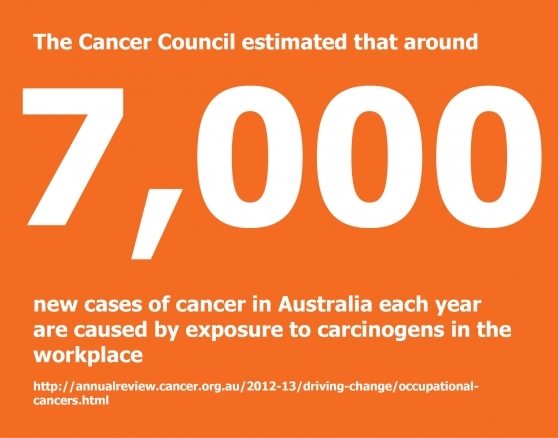
Cancers from workplace exposure
The Cancer Council estimated that around 7,000 new cases of cancer in Australia each year are caused by exposure to carcinogens in the workplace. The report estimates that as many as 1.5 million Australian workers, engaged in 51 different industries, may be exposed to...
Staying Cool Under Extreme Heat
As summer temperatures soar around the country, Worksafe Victoria shares some advice about how to prevent heat illness from working outdoors in hot weather or where heat is generated as part of work. With temperatures predicted to reach above 40 degrees Celsius across...
Donald’s Disney Safety Video – A Blast From The Past With Relevance Today
Sometimes it takes the ridiculous to remind us how our behaviours and safety standards can be in complete contrast from one environment to the next. In this classic slap-stick Disney cartoon from 1956, J. J. Fate follows Donald Duck through his workday, contrasting...